
How to Get Out of RCI Timeshare the Right Way
To achieve a successful RCI timeshare cancellation, you must first determine if you are within the legal rescission period (usually 3–10 days after purchase) to void the contract without penalty.
If this window has closed, the most effective strategies include negotiating a deed-back directly with your home resort, selling the interest on the secondary market (though often for a nominal fee), or hiring a legitimate timeshare exit team to identify contractual loopholes.
Complex World of RCI Timeshare Exit
Exiting a vacation ownership agreement is rarely as simple as making a phone call to a customer service representative. Because RCI is primarily an exchange network rather than the actual deed-holder, a canceled RCI timeshare request involves navigating two distinct layers: terminating your RCI membership and legally ending your underlying resort contract.
As we move through 2026, the secondary market remains heavily saturated, making an RCI timeshare exit a top priority for thousands of owners burdened by rising maintenance fees and restrictive booking rules.
RCI Membership vs. Resort Ownership
Many owners confuse their RCI membership cancellation with the cancellation of their actual timeshare. RCI is an exchange service that allows you to swap your home week for other RCI timeshare locations around the world.
While you can cancel your RCI account by calling customer service or simply letting your annual dues expire, this does not stop the maintenance fees or taxes from your home resort. To truly be free of financial obligations, you must tackle the RCI timeshare contract itself, which is the legal document tied to the property.
Effective RCI Timeshare Cancellation Strategies
1. The Rescission Window (The Grace Period)
The RCI timeshare cancellation policy is strictly governed by state and provincial laws where the resort is located. If you recently purchased your unit, you have a “cooling-off” period.
During this short time frame, you can send a formal letter to cancel RCI timeshare yourself interests with no financial loss and a full refund of your deposit. This is the only “free” way out, but it requires immediate action and precise mailing procedures.
2. The Deed-Back Program
Can you simply give it back? Many owners ask, Can I sell my timeshare back to RCI ? The answer is unfortunately no, because RCI doesn’t own the land or the units. However, you can ask your resort developer about a “deed-back” or “surrender” program. Some RCI timeshares offer this to owners who have paid off their mortgage in full and are current on all dues. This “exit” allows the resort to take the property back and resell it to a new buyer.
3. Selling and Renting on the Secondary Market
While RCI timeshare reviews often highlight the difficulty of reselling, platforms like RedWeek allow you to list your interest for sale. Be aware that most RCI timeshare exchange units sell for as little as $1 on eBay because the “value” is negated by the high annual fees. Renting out your unit can help cover annual costs, but it is not a permanent RCI timeshare cancellation solution; it merely delays the inevitable financial burden.
4. Timeshare Swap and Trading
An RCI timeshare swap allows you to trade your specific week for another, but this is a temporary fix for those unhappy with their location. It does not provide a path for cancelling RCI timeshare contract obligations. Swapping can sometimes make the timeshare more usable, but for those who want to stop paying fees altogether, swapping is simply moving furniture on a sinking ship.
Costs and Ownership Details
The cost of an exit can range from $3,000 to over $15,000 if legal intervention is required. To prepare for this process, you must gather your RCI timeshare destinations paperwork, the original purchase contract, and the RCI timeshare calendar 2025 to show your usage history.
Understanding your RCI timeshare login details is also essential for tracking your points or weeks status during the exit process, as any use of the timeshare during an exit attempt can sometimes restart the clock on your commitment.
Contract Loopholes and Misrepresentation
Professional exit teams look for Consumer Protection violations within your original sales meeting. If you were told your purchase was a “financial investment” or that the resort would buy it back from you later, this is a major loophole. Many RCI timeshare cancellation cases succeed because the salesperson omitted the “perpetual” nature of the contract, meaning it lasts forever and passes to your heirs. Identifying these lies is the key to a legal exit.
Avoiding Scams and Exit Fraud
The FBI and FTC report that timeshare fraud causes over $200 million in losses annually. Common scams involve guaranteed buyers who ask for upfront fees or transfer agents who disappear once they receive your money. When looking for the truth in this industry, always check the Better Business Bureau (BBB) and avoid any company that cold-calls you with a “buyer waiting.”
The Cancellation Letter: Your Legal Shield
A formal how-to-cancel RCI timeshare letter must be sent via certified mail with a return receipt requested. This letter should include:
- Your full name, address, and contract number.
- The resort name and location (e.g., cancel RCI village resort timeshare).
- A clear, bold statement: “I am exeRCI sing my legal right to cancel this contract immediately.”
- A request for a written confirmation that the contract is void.
Deep Look: Stats and Facts for 2026
To understand the scale of the issue, consider these industry statistics:
- Maintenance Fee Hikes: Average maintenance fees are increasing by 5-7% annually, now reaching an average of $1,200 to $1,500 per year regardless of use.
- Exchange Power Inflation: Only 25% of owners successfully use their RCI timeshare exchange points every year without having to pay additional “upgrade” or “exchange” fees.
- Resale Value Reality: Approximately 90% of timeshares on the secondary market have a resale value of less than $500.
- Legal Success Rates: Owners who use a specialized how to cancel RCI timeshare contract attorney have a 90% higher success rate than those who simply stop paying and hope for the best.
- Foreclosure Risks: Defaulting on your fees can result in a foreclosure that damages your credit score by 100 points or more for up to seven years.
Ownership Details and Long-Term Outlook
Whether you are looking for how to get out of RCI timeshare because of age, health, or changing finances, documentation is your best weapon. Keep a detailed log of every RCI timeshare login, every phone call to the resort, and every interaction with sales staff. If you are wondering, can I cancel my RCI timeshare after ten years of ownership, the answer is still yes—but it requires a “negotiated settlement” rather than a simple rescission.
In 2026, the complexity of these contracts has only increased. Resorts are now adding “exit fees” into the fine print of their RCI timeshare cancellation policy to discourage owners from leaving. You must be prepared to fight for your financial freedom. The industry is designed to keep you paying “forever fees,” but with the right strategy, you can break the cycle.
Final Steps to Freedom
To successfully how to cancel RCI timeshare, you must be persistent and informed. From the complex RCI timeshare cancellation policy fine print to the logistical hurdles of RCI timeshares, every detail matters. If you find yourself overwhelmed by the process or facing threats from debt collectors, remember that professional help is available.
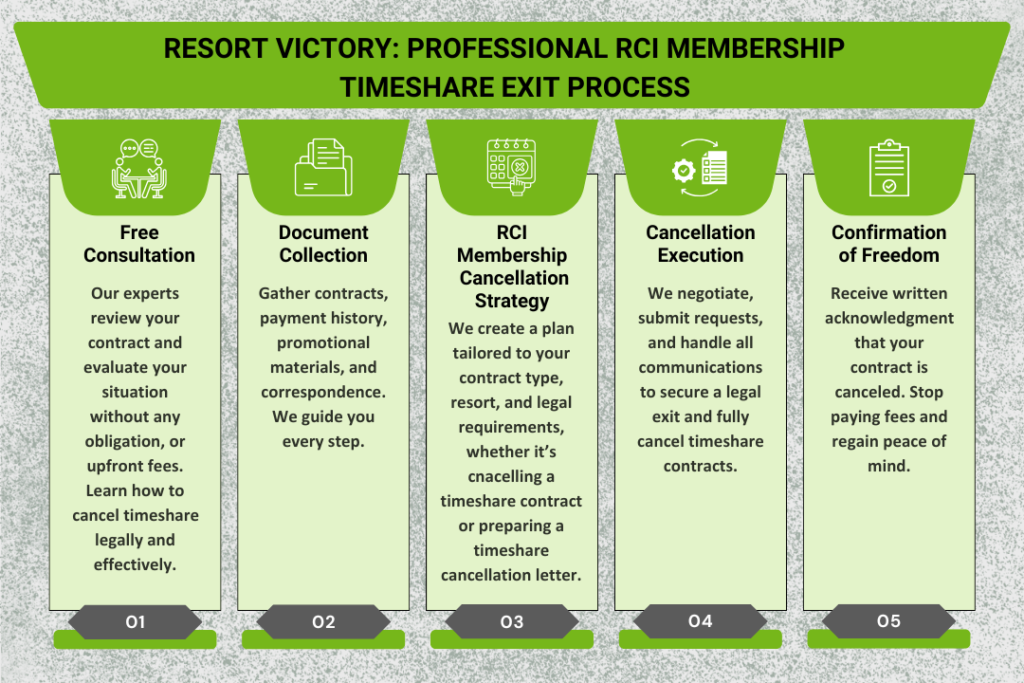
For those seeking a reliable, ethical, and proven path to freedom from their vacation obligations, the experts at Resort Victory specialize in navigating these complex legal waters to ensure your contract is terminated once and for all.